Why ꜣḫ.com is the correct form
ꜣḫ
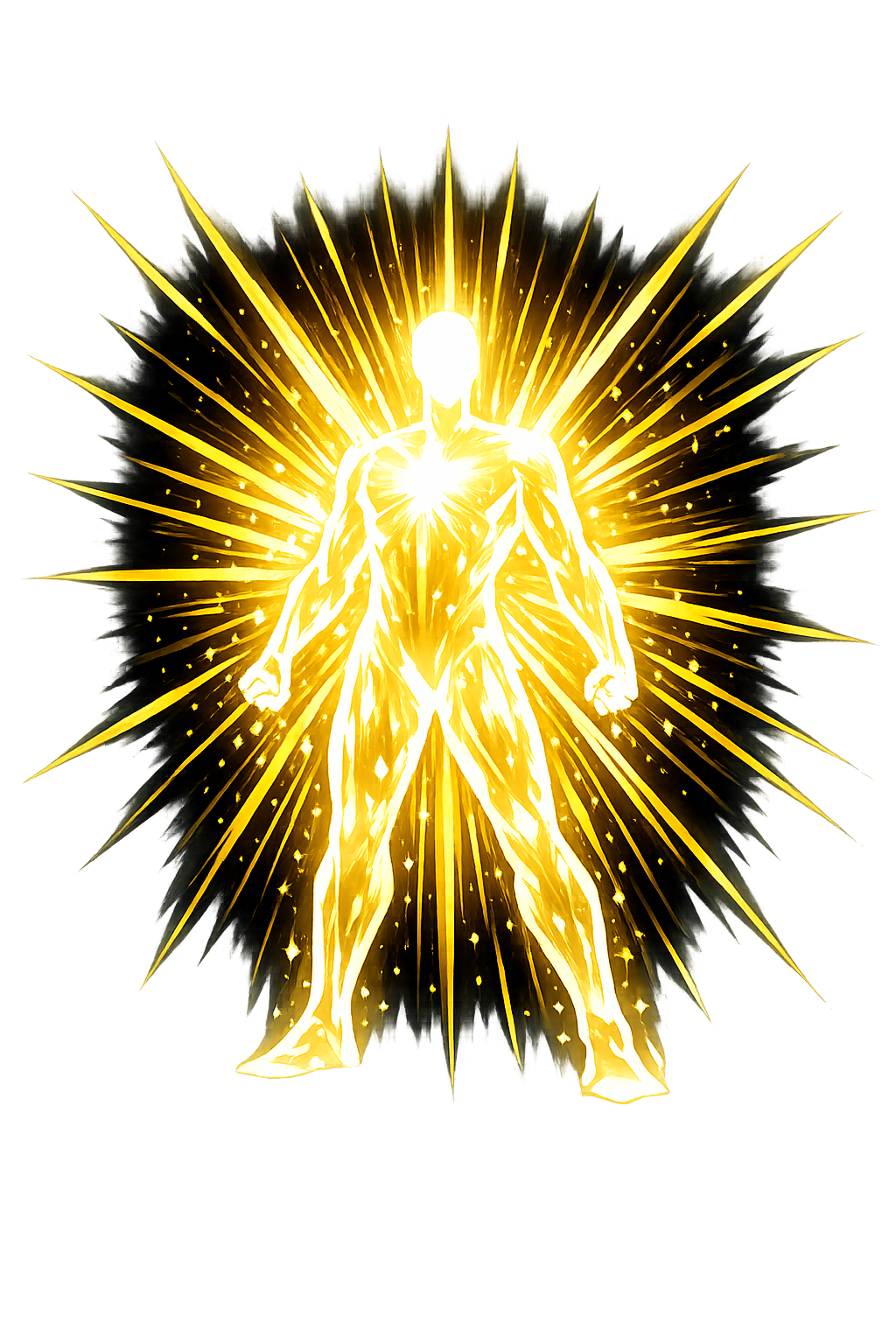
The name in its original Egyptian form — two glyphs that contain the mystery of transformation. The ꜣ is the Egyptian alef, the outstretched arm, the gesture of power and ascension. The ḫ is the placenta, the hidden organ that sustains life in darkness, the voiceless velar fricative that hisses like wind across the desert. Together they form the transfigured spirit — the one who has passed through death and emerged luminous. In the Pyramid Texts, the akh is not merely dead. The akh is effective — it can act, intercede, bless, and curse. It is the ultimate goal of every burial, every spell, every prayer.
AKH
Stripped to three letters. An abbreviation. A gasp. The transfigured spirit who dwells among the Imperishable Ones, who shines with the light of the circumpolar stars, who can cross the threshold between the living and the dead — reduced to a database field. The alef is gone. The velar fricative is gone. The transformation is gone. What remains is a shell: the shape of a name with none of its power.
ꜣḫ
The ꜣ (U+A723) is the Egyptian alef — the reconstructed pharyngeal or glottal stop, the sound of power and ascension. The ḫ (U+1E2B) is the voiceless velar fricative — the sound of breath escaping, of wind across sand, of the spirit leaving the body. Together they encode a concept that has no equivalent in any modern language: the successful transformation of the dead into a luminous, effective, star-dwelling being. The domain encodes to Punycode, but the browser displays the truth.
ꜣḫ.com → xn--xh8ea.com
The non-ASCII characters ꜣ (U+A723, Egyptian Alef) and ḫ (U+1E2B, Latin Small Letter H with Breve Below) are encoded while the ASCII remains visible. To the DNS, it is Punycode. To Egypt, it is ꜣḫ.
How the transfigured spirit was truly spoken
Domains, symbols, and the luminous dead
The akh is not merely the dead. It is the dead who have succeeded. In Egyptian belief, death is not the end — it is a transformation, a journey, a trial. The ba (soul) and ka (life-force) must unite through ritual and moral worth to become the akh. This is not automatic. It requires the correct funerary spells, a heart lighter than the feather of Ma'at at judgment, and the preservation of the body that houses the spirit. Those who succeed become luminous, powerful beings that dwell among the stars — the Imperishable Ones, circling the north celestial pole for eternity. The akh can intervene in the world of the living, bringing blessings to the virtuous and curses to the wicked. To become an akh is the ultimate goal of Egyptian mortuary practice.
The akh is the transformed state of the deceased — not a ghost, not a shadow, but a luminous being of power and effectiveness. The word akh itself means "to be effective, to be useful, to be luminous." The akh can act in the world, speak to the gods, and influence the living.
The journey from death to akh-hood is an ascension — from the tomb to the sky, from darkness to starlight, from powerlessness to effectiveness. The pyramid texts are filled with spells to "go forth as an akh," to "ascend to the sky," to "become a star among the gods."
The akh join the circumpolar stars — the Imperishable Ones — circling the north celestial pole for eternity. They become imperishable like the gods, their light shining down upon the living. The Egyptians believed that the dead who became akh literally became stars in the northern sky.
The akh is not passive. It can visit the living in dreams, intercede with the gods on behalf of descendants, and punish those who desecrate tombs or neglect offerings. The pyramid texts are filled with spells to become a mighty akh — one whose power endures for millions of years.
Stories of transformation, starlight, and the eternal luminous dead
After death, the soul does not rest. It begins a journey. The ba — the personality, the soul-bird — must find its way back to the tomb each night. The ka — the life-force, the double — must be sustained by offerings of food and drink. But the ba and ka alone are not enough. They must unite. Through the correct funerary spells, spoken by priests who have preserved the mysteries since the time of the gods, the two aspects of the soul merge. And then comes the judgment. The heart is placed on the scales against the feather of Ma'at. If the heart is heavy with sin, with falsehood, with violence — it is devoured by Ammit, the devourer, and the soul ceases to exist. But if the heart is light — if the deceased lived in truth — the soul is declared maa-kheru, "true of voice," and the transformation is complete. The dead becomes akh. The shadow becomes star.
The akh do not remain in the tomb. They ascend. They join the circumpolar stars — the ikhemu-sek, the Imperishable Ones — those stars that never set, that circle the north celestial pole for eternity without ever dipping below the horizon. To the Egyptians, these stars were the gods themselves, and the akh who joined them became gods in their own right. The Pyramid Texts speak of the king ascending to the sky "as an akh, as a star, as a god." He rides the celestial barge with Rꜥ. He circles the pole with Osiris. He shines down upon the living, his light a blessing to the virtuous and a warning to the wicked. The akh is not dead. The akh is eternal light.
The akh is not a passive shade, wandering the halls of the Duat. It is a being of power. It can visit the living in dreams, speaking words of guidance or warning. It can intercede with the gods on behalf of descendants who make offerings at its tomb. And it can punish. The pyramid texts and tomb inscriptions are filled with curses against those who would desecrate tombs or neglect offerings: "May the akh pursue him! May the akh strike him! May the akh condemn him before the tribunal of the gods!" The akh is effective — akh means "to be effective, to be useful" — and its effectiveness extends into the world of the living. To become an akh is to become a force in the cosmos, a star that shines, a spirit that acts, a dead person who has won.
Ra has the sun. Osiris has the underworld. Anubis has the embalming. Ma'at has the scales. Shu has the air. But the akh has the transformation itself. It is the proof that death is not an end but a passage — that the correct spells, the light heart, the preserved body, and the eternal stars form a ladder from the tomb to the sky. The akh is older than the pyramids in concept, though the word itself is written on their walls. It is the Egyptian answer to the oldest question: what happens when we die? And the answer is: we become light.
This is not a directory. This is a resurrection.
Enter the Lexicon